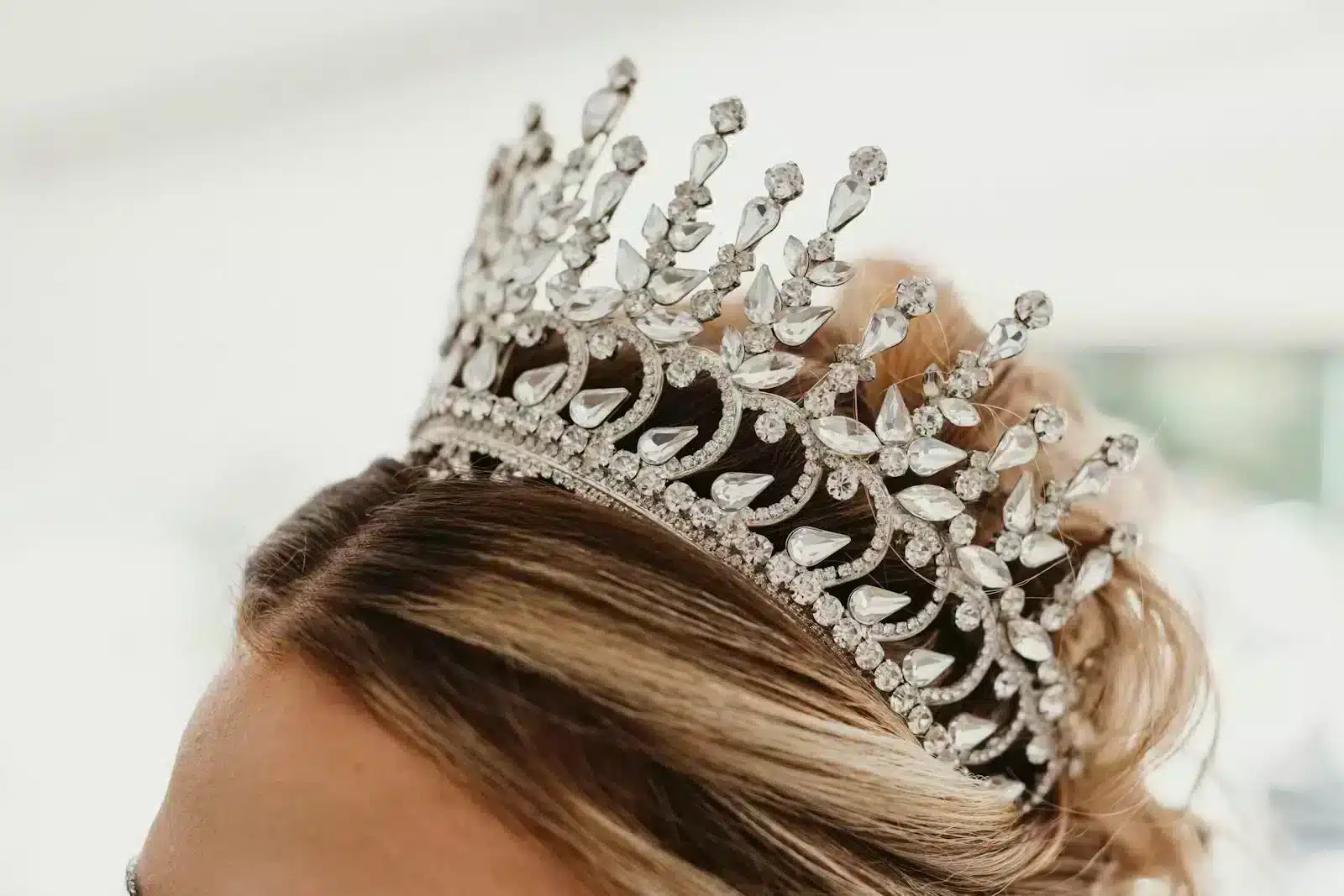
For millennia, head jewelry has embodied elegance, power, and prestige. From ancient times to contemporary fashion catwalks, these accessories have constantly evolved while maintaining their ability to fascinate. Sparkling tiaras, majestic crowns, and delicate headbands have been reinterpreted over the centuries to suit tastes, cultures, and functions. Today, these adornments are enjoying a new life, blending ancient traditions with modernity. Let’s dive into the history and evolution of head jewelry, discovering how these iconic pieces continue to make a lasting impression.
Hair jewelry in antiquity: symbols of divinity and power
- Ancient Egypt: between spirituality and sophistication

Head jewelry appears very early in human history, particularly in ancient Egypt, where pharaohs and elites wore diadems and crowns to reflect their divine status. The pschent, a double crown associated with the kingdoms of Upper and Lower Egypt, symbolized the unification of the country. At the same time, diadems adorned with precious stones, such as lapis lazuli and turquoise, were also worn by nobles to display their wealth and connection to the gods.
- Ancient Greece: an aesthetic imbued with nature.
In ancient Greece, diadems and headbands, often made of gold, were decorated with motifs inspired by nature, such as laurel leaves, flowers or bunches of grapes. These ornaments were worn during religious ceremonies, weddings or to celebrate sporting victories, such as the laurel wreaths awarded to Olympic champions.
- The Roman Empire: opulence and prestige.
The Romans adopted and adapted Greek traditions, creating more elaborate diadems, often adorned with pearls and precious stones. These jewels were worn by empresses and aristocratic women to reflect their status and influence. Triumphal crowns, reserved for victorious generals, symbolized military power.
The Middle Ages and the Renaissance: crowns and tiaras as emblems of royalty
- Medieval Europe: symbols of divine power.
During the Middle Ages, crowns became one of the most recognizable attributes of rulers. Made of gold and set with precious stones such as rubies and sapphires, they were symbols of divine power and royal rights. Diadems were also used, albeit more discreetly, by noblewomen to emphasize their rank.
Head ornaments were often inspired by religious motifs, such as crosses or fleurs-de-lys, emphasizing the idea that the power of monarchs had a divine origin. Royal weddings and coronation ceremonies were the main occasions for displaying these sumptuous adornments.
- The Renaissance: refinement and innovation.
With the Renaissance, a period marked by artistic and cultural renewal, head jewelry gained in sophistication and complexity. Tiaras became lighter, often adorned with pearls, and took on more elaborate forms to reflect the aesthetics of the time.
Headbands, inspired by medieval traditions, also became popular among women, often paired with elaborate hairstyles and luxurious fabrics such as silk or velvet. Head jewelry in the 19th century: the triumph of the tiara
The 19th century marked the golden age of the tiara, thanks in particular to the influence of the Napoleonic Empire and the European royal courts. Napoleon Bonaparte, who saw in these ornaments a means of glorifying his reign, encouraged their production. His wife
Empress Josephine popularized tiaras decorated with cameos and precious stones.
During the Victorian era, tiaras became a key part of elite evening wear. Often made of gold and set with diamonds, they were worn at balls and formal events. Simpler floral headbands and crowns remained popular for weddings and more intimate occasions.
The 20th century: reinvented ornaments.

- The 1920s: the era of art deco headbands.
The Roaring Twenties marked a break with royal traditions. Headbands became a symbol of female emancipation, adopted by flappers (young, modern and daring women) to complement their short, wavy hairstyles.
These accessories, often decorated with pearls, rhinestones and feathers, reflect the Art Deco aesthetic, characterized by geometric lines and clean design. Tiaras, although less popular, continue to be worn on grand occasions, especially by royal families.
- The 1950s: Hollywood glamour.
With the golden age of Hollywood, tiaras and headbands found their way back into women’s wardrobes, but with a touch of modern glamour. Actresses like Audrey Hepburn and Grace Kelly embodied this trend, wearing delicate headpieces that combined tradition and modernity. Rhinestone tiaras became accessible to the general public, inspiring wedding hairstyles and formal events.
- The 1980s and 1990s: fluctuating popularity.
In the 1980s, tiaras enjoyed a resurgence thanks to events such as Princess Diana’s wedding, which made her headpieces iconic. However, the 1990s saw a decline in their popularity, with more minimalist looks favoring them.